
Allentown Previous Residents by Era
An address trail in Allentown crosses several custodians. The County Property Search and the Parcel Viewer provide a present-day PIN, site address, deed reference, and assessment context. The Lehigh County Clerk of Judicial Records, Recorder of Deeds Division, maintains the transfer route. Older household evidence comes from Allentown Public Library, the Lehigh County Historical Society, census microfilm, and maps. Use the source nearest to the period in question, then save the year, page, PIN, book/page, or instrument reference before moving to the next one.
| Trail source | Local time span | Access point | What it can establish |
|---|---|---|---|
| Recorder records | 1812-present | Recorder, LANDEX, County ORA, counter | Recorded parties, instruments, and legal-description continuity |
| Russell/IQS index | 1812-1983 | Recorder historical route or County ORA | Older grantor-grantee index support |
| APL city directories | 1860-1980 | Allentown Public Library microfilm | Dated address and listed-household snapshot |
| LCHS city directories | 1860-current | Lehigh County Historical Society library | A second directory channel, by edition |
| Local census holdings | 1790-1930 at LCHS; 1800-1930 at APL | Library and Historical Society | Household composition at the census date |
| Sanborn maps | 1885-1927 locally | LCHS and Library of Congress | Building, block, and street-name continuity |
| City permits and code cases | Public hub announced 2026 | City RTK Data Hub, counter, or RTK | Administrative property context, not a household list |
A property owner is not automatically a listed occupant. Likewise, a directory entry is a dated publication record, not a title opinion. Previous residents research is strongest when a current parcel result, a deed reference, and a year-specific directory or map agree on the same place.
Allentown's 1812 Deed Trail
Lehigh County was created in 1812, and the County describes Recorder land-record holdings from that year forward. It permanently retained books recorded through April 19, 2002, began computer imaging on April 22, 2002, and describes security microfilm or computer-image preservation from 1812 to the present. That layered retention is useful for Allentown previous residents research: an older transfer may require a book or microfilm route even when a newer transfer is visible through an electronic system.
The Recorder directs online searching to LANDEX. County materials identify the Russell/IQS index for 1812-1983 and LANDEX for 1812-present. When a web result ends, the route continues at the Recorder counter, not by assuming that the transfer vanished. Bring the PIN, legal-description terms, names, a deed reference, and a narrow time range. The office does not perform open-ended research for requesters.
For a defined copy request, the Recorder fee schedule lists $0.50 per in-person page, $1 per page by mail or email, and a $1.50 certification addition per document. The Recorder of Deeds Division is in Room 122 of the Lehigh County Courthouse, 455 W. Hamilton Street, with posted weekday hours of 8:00 a.m. to 4:30 p.m.
Note: Historical office titles may differ on old papers, but the modern Clerk of Judicial Records now includes the Recorder function.
Allentown Previous Residents and Changed Addresses
The City’s historic-property research guide warns that street names and house numbers can change. A failed exact-address search may therefore be an address-continuity problem, not proof that a household disappeared. Preserve the parcel PIN, subdivision or lot language, deed reference, street form, and directory year. Those details provide a bridge when the printed number or street label no longer matches today’s address.
The City’s method starts in the address cross-reference of a late directory, locates the street and number, notes the listed person, and then checks the alphabetical section for the matching address and other printed details. Record the year and page before going backward. The 1860 edition is a clear early starting point because Penn State’s digitized Boyd directory identifies its publisher and contents.
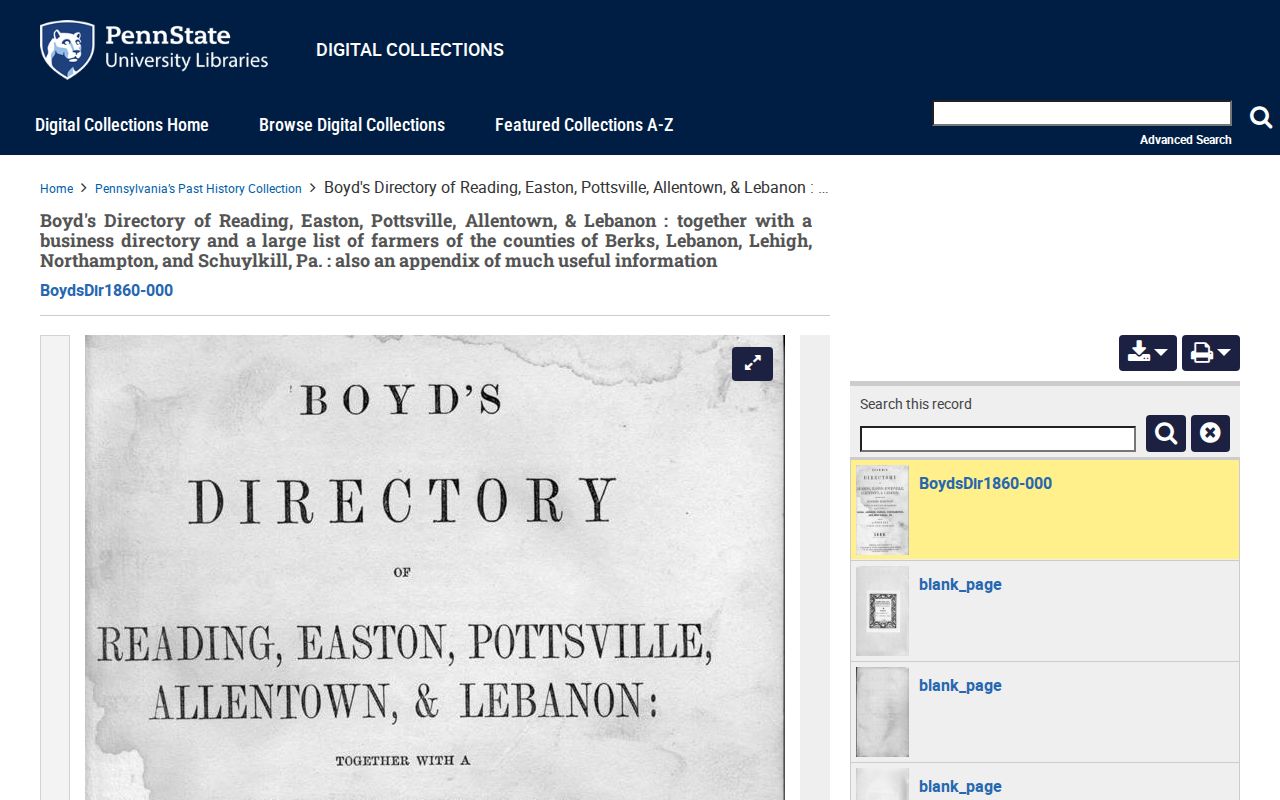
The digitized directory is a dated snapshot. It becomes more useful when its page and address are checked against a deed description or map sheet instead of treated as a complete household record.
Trace Allentown Previous Residents in Deeds
Start the ownership side of the trail with the physical property, not an open-ended name search. The County’s public form accepts an address, PIN, or document ID or instrument number and requires a CAPTCHA; it does not offer an anonymous owner-name field. Once the parcel is reached, the Viewer can supply the owner as stored by Assessment, the deed reference, lot information, sale fields, and mailing lines. Treat those mailing lines as tax correspondence, not proof that an owner lived at the site.
- Search the known Allentown address or PIN, then save the exact site address, PIN or PARNUM, owner, lot description, and deed reference.
- Open the Parcel Viewer to compare the deed reference, sale information, and lot or subdivision language.
- Use the Recorder route to locate the current owner as grantee and confirm the recording date and legal description.
- Read that deed for the seller, then search the seller as an earlier grantee while matching the same legal description.
- Repeat backward. If the web path fails, take the names and references to Recorder books, images, or microfilm.
- Grantor / grantee
- The grantor is the party transferring an interest; the grantee is the party receiving it in the recorded document.
- Chain of title
- A sequence of recorded transfers for the same parcel, checked through the parties and legal description rather than surname alone.
- Legal description
- The lot, subdivision, boundary, or parcel language in a deed. It can remain useful when an old street number changes.
For a current address-by-address route after the historic trail reaches the present, use the Allentown street directory for the broader street-record chain.
Allentown Previous Residents in Directories
Directory and census research adds the household layer to a deed chain. Allentown Public Library holds city-directory microfilm from 1860 through 1980, while the Lehigh County Historical Society lists directories from 1860 to the present. The library’s directory route is address-first: use the cross-reference, then verify the entry in the alphabetical section. Its local collections, hours, and microfilm access are available through the Allentown Public Library.
- Choose the newest available address cross-reference year and copy the street, number, listed name, year, and page.
- Check the alphabetical entry in that same edition for the matching address and printed household clues.
- Move to an earlier edition, keeping spelling variants and any change in number separate from a confirmed move.
- Pair the directory interval with a census schedule, noting that the two sources capture different dates and facts.
- Use a map, PIN, deed description, obituary, or estate index to test a gap before drawing a conclusion.
APL has census microfilm for 1800-1930, and LCHS has local federal censuses for 1790-1930. The full collection details belong with the Allentown city directory holdings; the useful house-history task here is to compare one dated address listing with the next available household snapshot.
Note: A sudden absence from one directory may reflect a gap, a name change, a death, or a changed address rather than one certain event.
Allentown Previous Residents and Sanborn Maps
Sanborn fire-insurance maps are the physical bridge when an old directory number or street name does not line up with a modern parcel. LCHS holds local Sanborn material for 1885-1927, and the Library of Congress 1885 Allentown map is a digitized example. A sheet can show a building footprint, block pattern, and street naming. It does not identify a person, so it should be logged beside the directory page and deed reference it helps connect.
Historic districts can add context. City preservation material identifies Old Allentown, Old Fairgrounds, and West Park as distinct development areas. That context helps explain why the age and continuity of records vary by address, but it does not replace the parcel evidence. A map comparison works best when the street form, lot description, and later site address are preserved together.
Allentown Previous Residents Need Separate Evidence
Some official databases can clarify a narrow record but cannot establish who lived at an address. A property assessment is not a household list, a sale year is not a move date, and a business filing is an entity record rather than an address-history record. Keep each source in its proper lane. When a name appears in several systems, match its date, parcel reference, document type, and stated role before connecting it to an Allentown address.
The Pennsylvania business-record search is limited to entity name or file number, not a universal person or address index.
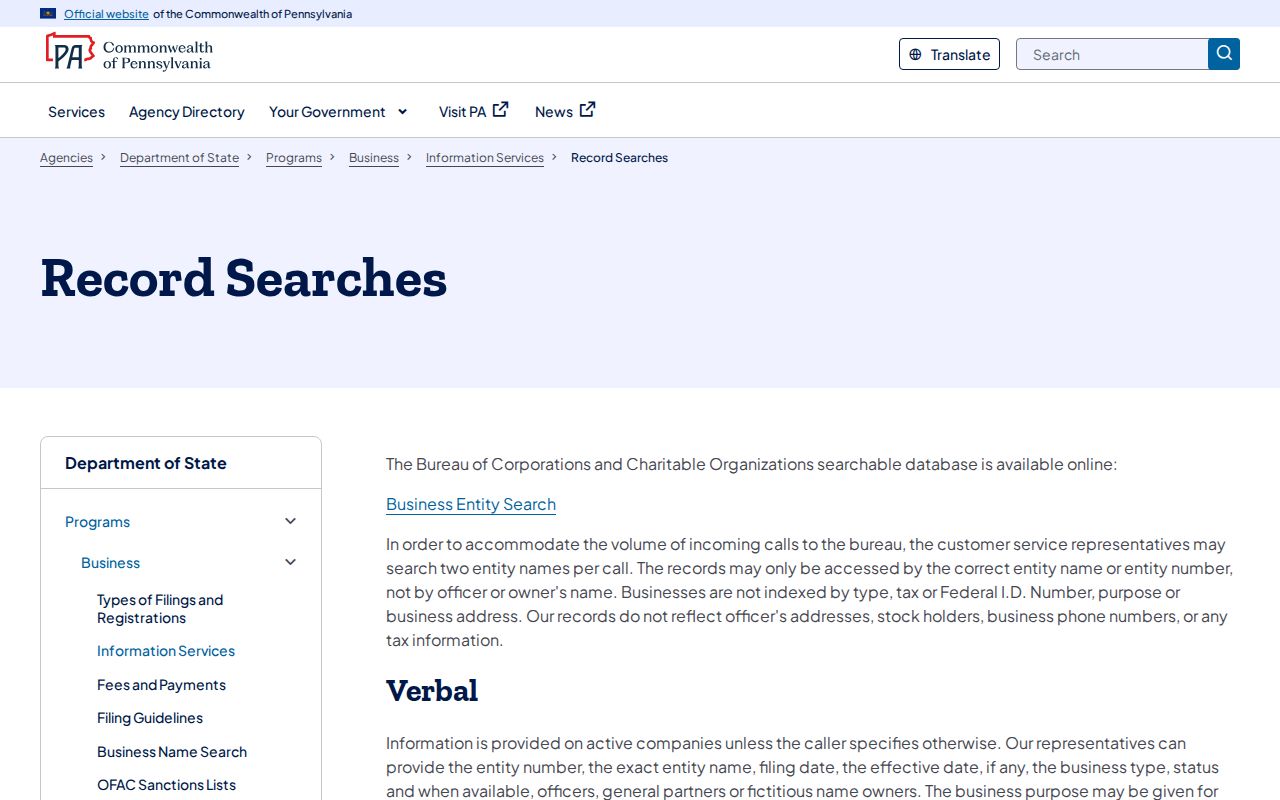
That limitation is why a business filing may provide a dated lead but cannot replace a deed, directory cross-reference, or parcel record in a house history.
The Pennsylvania license-verification service is another separate official record route.
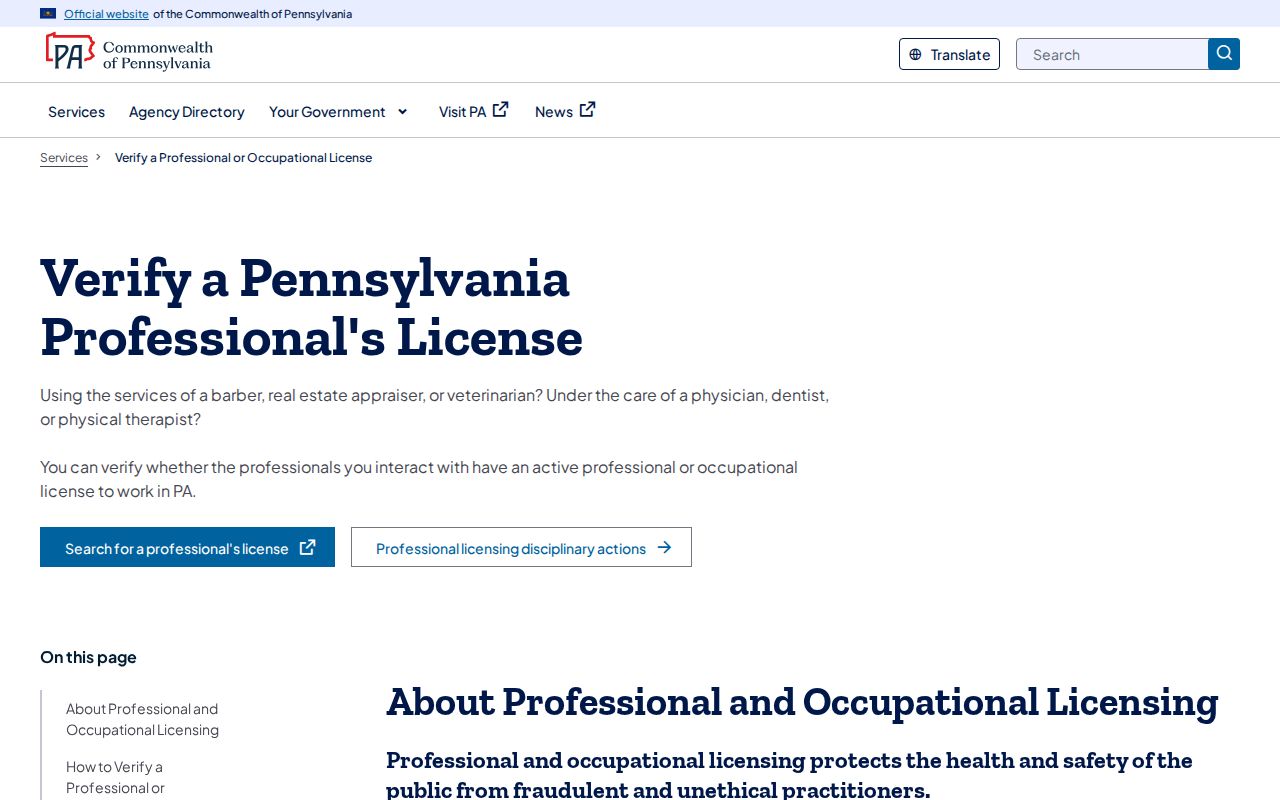
A credential status can be checked in its own system, but it does not establish historical occupancy at an Allentown property.
Allentown Previous Residents at Trail End
Obituaries, probate, and archive collections can close a historical address trail without turning it into a search for a living person. APL’s Morning Call obituary index covers 1895-1983 and points researchers to the article date and page, which can then be retrieved on microfilm. LCHS adds indexed wills and estates for 1815-1916, local marriage and death notices, church and cemetery volumes, and other early county material. The Register of Wills remains the local probate route for a defined estate record.
The Pennsylvania State Archives naturalizations guide documents another county historical collection route. Naturalization material may help sort an identity or spelling in a dated family trail, but it is not a substitute for the address evidence.
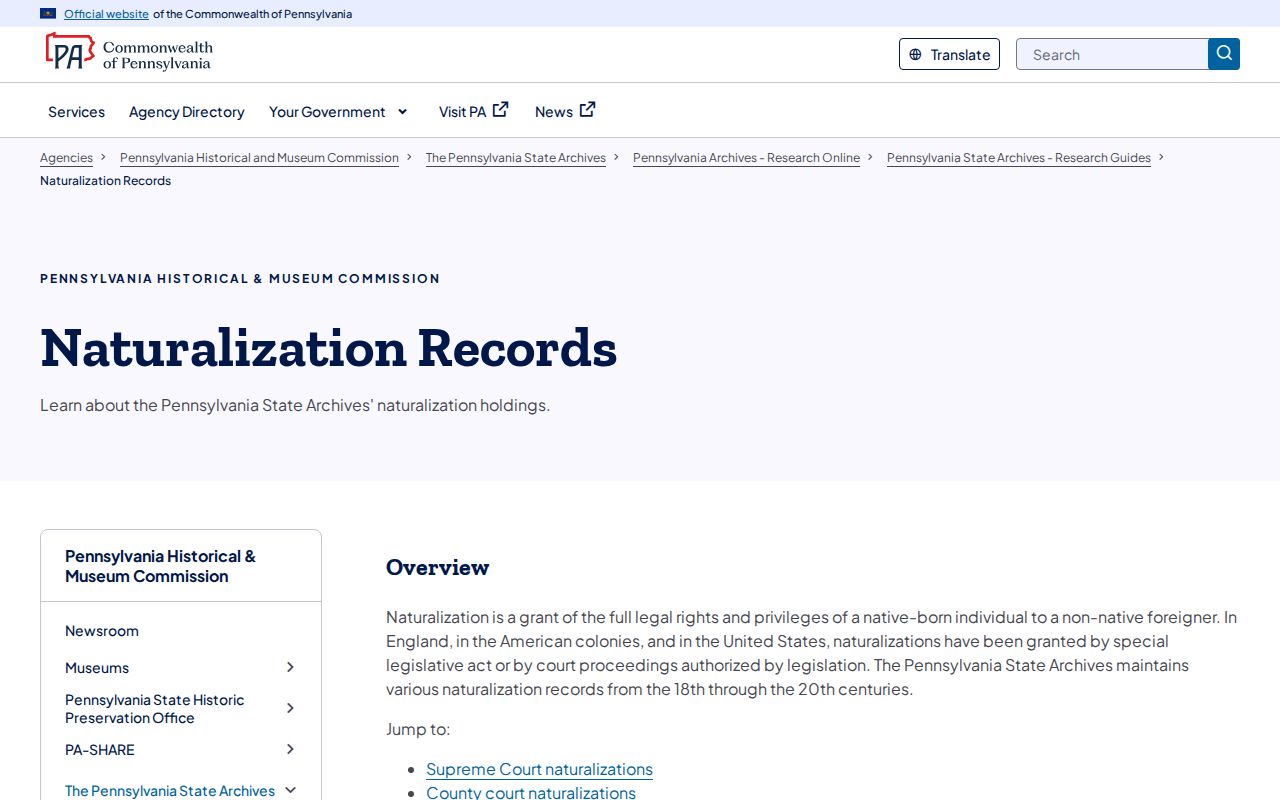
Archive material is most useful after the property and directory timeline has narrowed the person, period, and document request.
The Pennsylvania public-safety registry guidance has a narrow public-safety purpose and anti-harassment warnings. It is not an address-history source.
Use old-address research for family history, estate questions, and understanding a property’s past, while keeping protected and unrelated records outside the trail.
Lawful use. Allentown previous residents research is for personal historical and property context. Using an address trail to stalk, threaten, or harass a living person can violate Pennsylvania harassment and stalking laws, 18 Pa.C.S. §§ 2709 and 2709.1.