
Allentown Resident Lookup Evidence
An Allentown resident lookup works best as a dated evidence chain. A parcel record can identify the assessed owner, tax-mailing lines, site address, deed reference, and sale fields. It cannot establish who is physically at an address. A docket identifies a party and a case path, not a complete personal profile. A historical directory or obituary may support a past connection, while an estate file can identify a representative. Start with the record that matches the question and keep its date, source, and limits with the result.
| Record | What It Can Confirm | Allentown Route | Access Boundary |
|---|---|---|---|
| Assessment parcel | Owner, situs, tax mailing lines, PIN, and deed reference | County of Lehigh Property Search and Parcel Viewer | Address, PIN, or instrument search; owner is not automatically a resident |
| Recorded deed | Recorded parties and legal-description continuity | Recorder of Deeds Division and LANDEX | Index, image, counter, and paid-access routes differ |
| Court docket | Named party, court, status, and case activity | Pennsylvania UJS Case Search | Only eligible public docket material appears |
| Vital or obituary source | Event, date, and family-history clues | DOH, State Archives, APL, and LCHS | Modern certificates and protected records have separate rules |
| Estate, business, or license | Defined filing, credential, or estate context | Register of Wills, DOS, and PALS | A lead, not proof of a current address |
When an address is known, begin with the County record. When the question is historical, begin with the date and use the library or archives route before trying to match a modern name result.
Allentown UJS Docket Checks
For a court-related Allentown resident lookup, use the free statewide UJS Case Search with a party name, then narrow to Lehigh County or the 31st Judicial District and a filing-date range. The portal also offers docket and citation numbers, court-office choices, case category, status, and specialized criteria. A middle initial, known court, and time period are stronger than a surname alone. The portal warns that recent clerk entries may not appear immediately and that legal or technical limits can keep material off the public result.
| Public docket result | How to read it |
|---|---|
| Docket number, court, participants, and role | Use these to distinguish a same-name result from the person sought. |
| Filing date, status, calendar event, and case category | Compare the dates and court context with independent records. |
| Judge, documents filed, hearings, and activity | A docket summarizes activity. It is not the underlying case file. |
| Missing or restricted material | Juvenile, expunged, limited-access, and some civil matters may not display. |
For a defined civil, family, or judgment file, contact the Clerk of Judicial Records Civil Division with the docket number and division. A record removed under a retention schedule is not proof that the event never existed.
Verify an Allentown Resident Lookup
Run a resident lookup in an order that tests identity instead of building a match from a name alone. The County property form has no public owner-name option, so use a known address, PIN, or instrument number. Preserve the site address, parcel PIN, mailing lines, deed reference, and result date. Then compare the property record with the Recorder party record and, if relevant, a court or historical source. A matching legal description, date, and role carry more weight than a repeated surname.
- Start with a known Allentown address, PIN, or instrument number in the County property system. Record the standardized site address and PIN.
- Open the associated parcel information and note the deed reference, assessed owner, and tax-mailing lines without treating them as an occupancy claim.
- Check the Recorder route for the grantee or grantor and match the legal description, lot, PIN, and recording date.
- For a court clue, search the party name with a date range and Lehigh County filter, then compare the party role and case type.
- Use a dated directory, obituary, probate, or vital index only to support the time period it actually covers.
- Docket
- A court’s running summary of a case, including its number, parties, dates, and activity.
- Index and image
- An index points to a record. An image is a view of the record itself and may use a different access route.
- Certified copy
- A custodian-issued copy carrying its official certification, available only when that office’s eligibility rules are met.
Allentown Vital Record Paths
Pennsylvania’s Division of Vital Records, not the City or County Recorder, issues certified birth and death records from 1906 forward. Its online, mail, and in-person channels have eligibility, signature, identification, and relationship requirements. For older research, the public timing rules differ by record. A Report of Live Birth becomes public after 105 years and a death record after 50 years. The State’s genealogy information and State Archives request route describe historical index and non-certified-copy paths.
Pre-1906 Allentown questions often need a different chain: the County courthouse, parish material, Allentown Public Library, and the Lehigh County Historical Society. The Society holds local birth and death registers, church and cemetery volumes, marriage microfilm, and newspaper notices. A historical index can confirm a lead, but it does not replace an official modern certificate.
Allentown Voter Status Limits
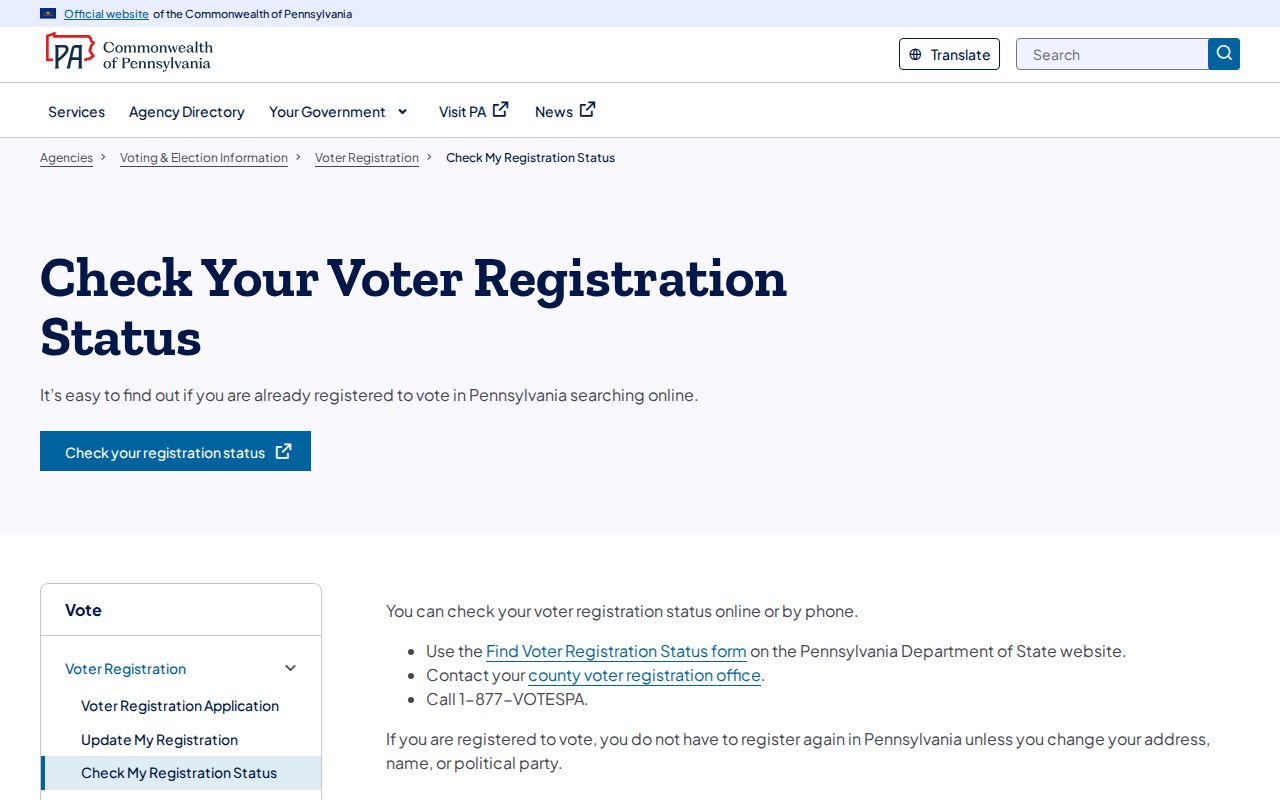
The state’s Find Voter Registration Status route is for an individual checking their own registration. It uses a registration name, Lehigh County, ZIP code, and date of birth or an alternate credential path. It is not a browseable Allentown resident lookup. Under 25 Pa.C.S. § 1404, voter-list access and copied data have defined election, political, or law-enforcement uses, and public list recipients cannot put the lists online. An apparent nonmatch also cannot override an Address Confidentiality Program protection.
The official Pennsylvania voter-status screen shows the controlled nature of this inquiry.
For registration changes, forms, or an election-office question, use the Lehigh County Voter Registration office rather than relying on an old search result.
The County voter-registration office provides the local form and status channel.
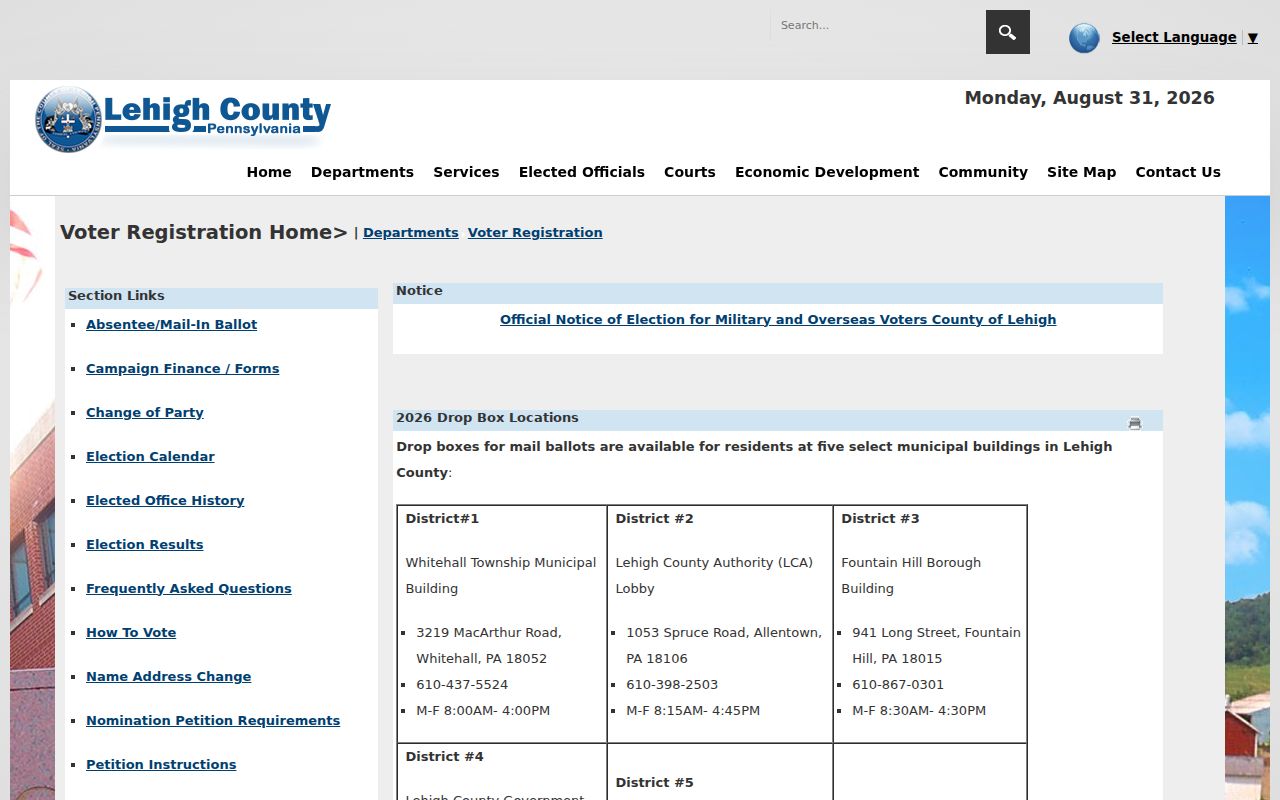
County staff, not a directory result, handle a correction to a registration record.
Allentown Estate and License Leads
An heir or estate question has an official sequence. Start with the decedent’s name and date at the Lehigh County Register of Wills or Orphans’ Court route, then compare a death index, obituary, and deed record. An estate file may identify a personal representative or a property connection, but its protected portions remain protected. For past residents, a dated obituary entry at the library should be followed to the original microfilm notice before it is used as evidence.
Business filings and professional licenses are narrower leads. The Department of State business search works by entity name or file number, not by officer, owner, or address. PALS can confirm a credential’s status, number, and some discipline history. Neither result proves that a person presently lives at an Allentown address.
Correct Allentown Record Errors
Corrections belong with the office that created the record. Raise assessment or address problems with the County custodian; ask the court or clerk about a docket correction; send a registration change to the County election office; and use the Department of Health amendment process for a vital record. When a defined City record is needed, Pennsylvania’s Right-to-Know Law, Act 3 of 2008, 65 P.S. §§ 67.101-67.3104, provides a records-request framework. Agencies normally have five business days to respond, with a written extension procedure in the statute.
The City’s February 2026 Data Hub announcement is a useful starting point for defined code-case and building-permit searches.
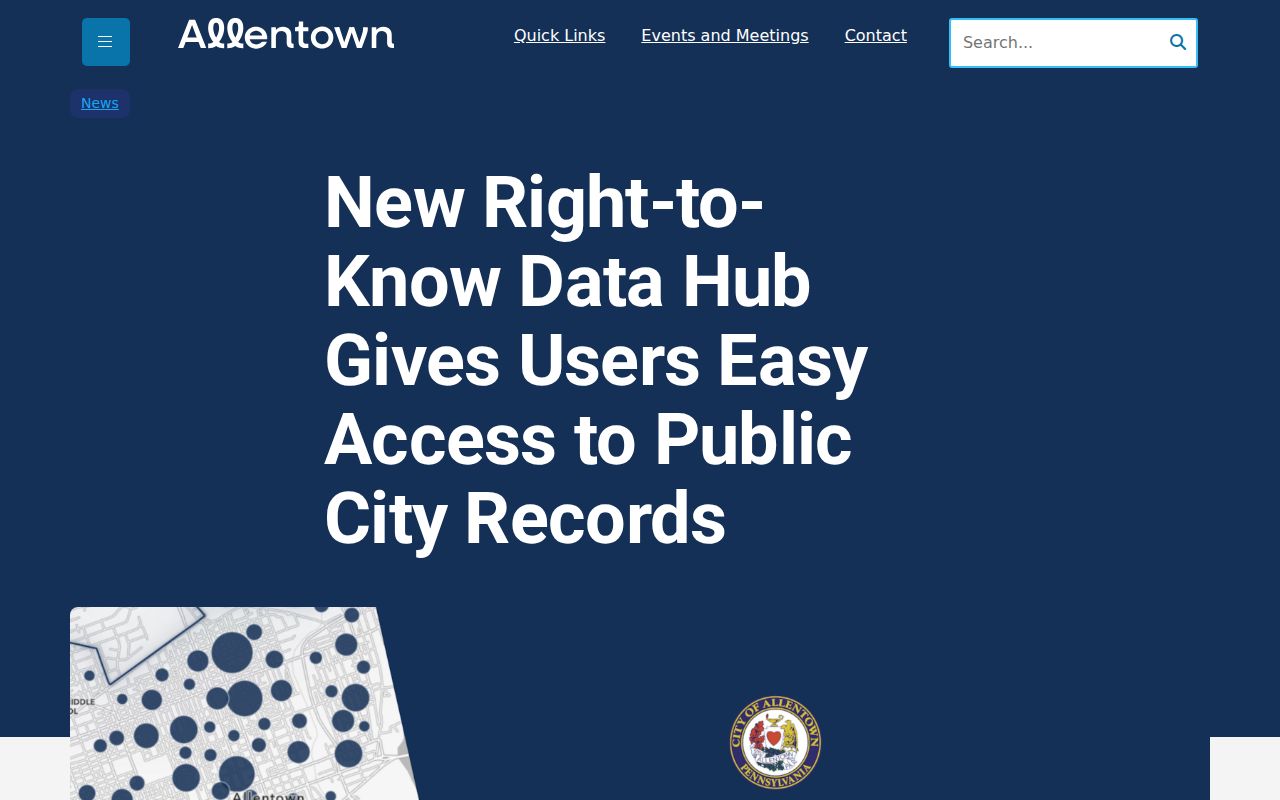
Check the live data fields before treating a City result as complete, then ask the custodian for a specific missing record.
The City of Allentown Right-to-Know office publishes email, fax, mail, and in-person request channels.
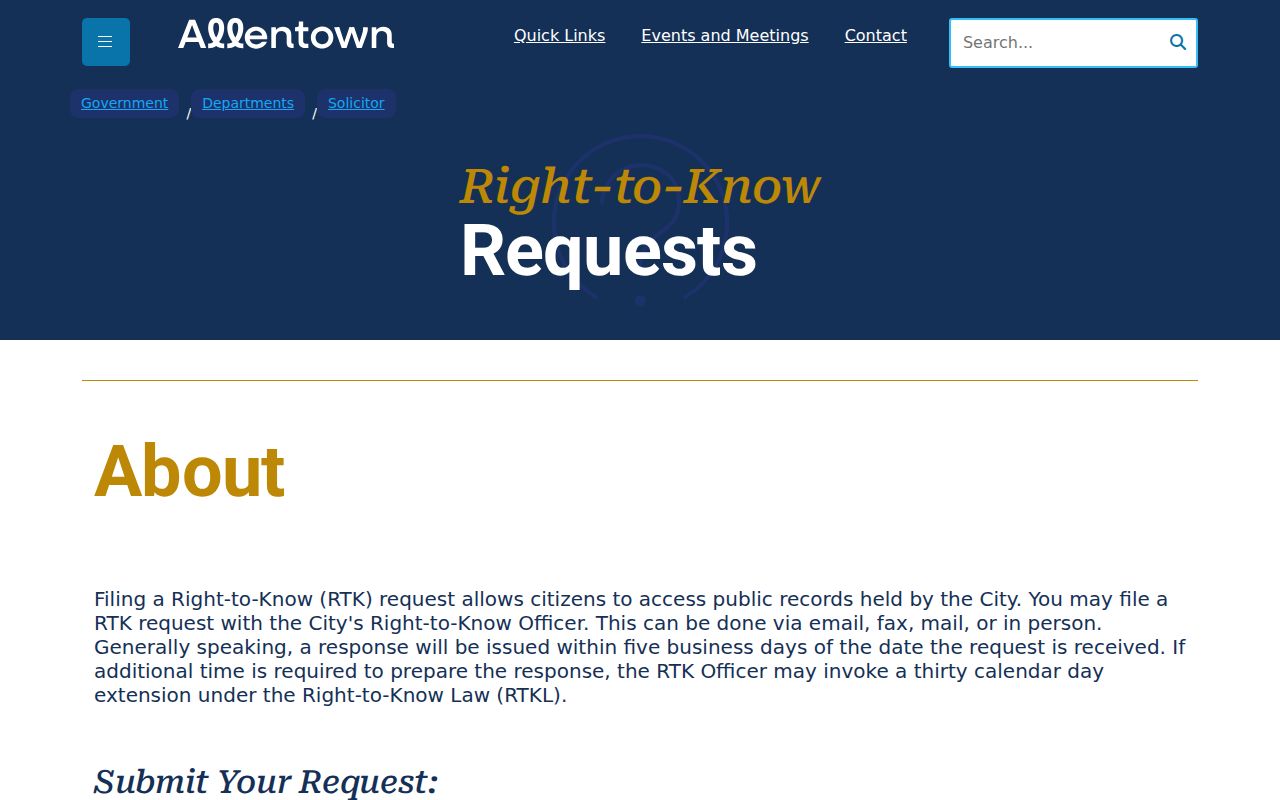
A focused description, date range, and record type make a request more usable than a request for every fact about a person.
Read the Pennsylvania Right-to-Know Law overview before sending a request.
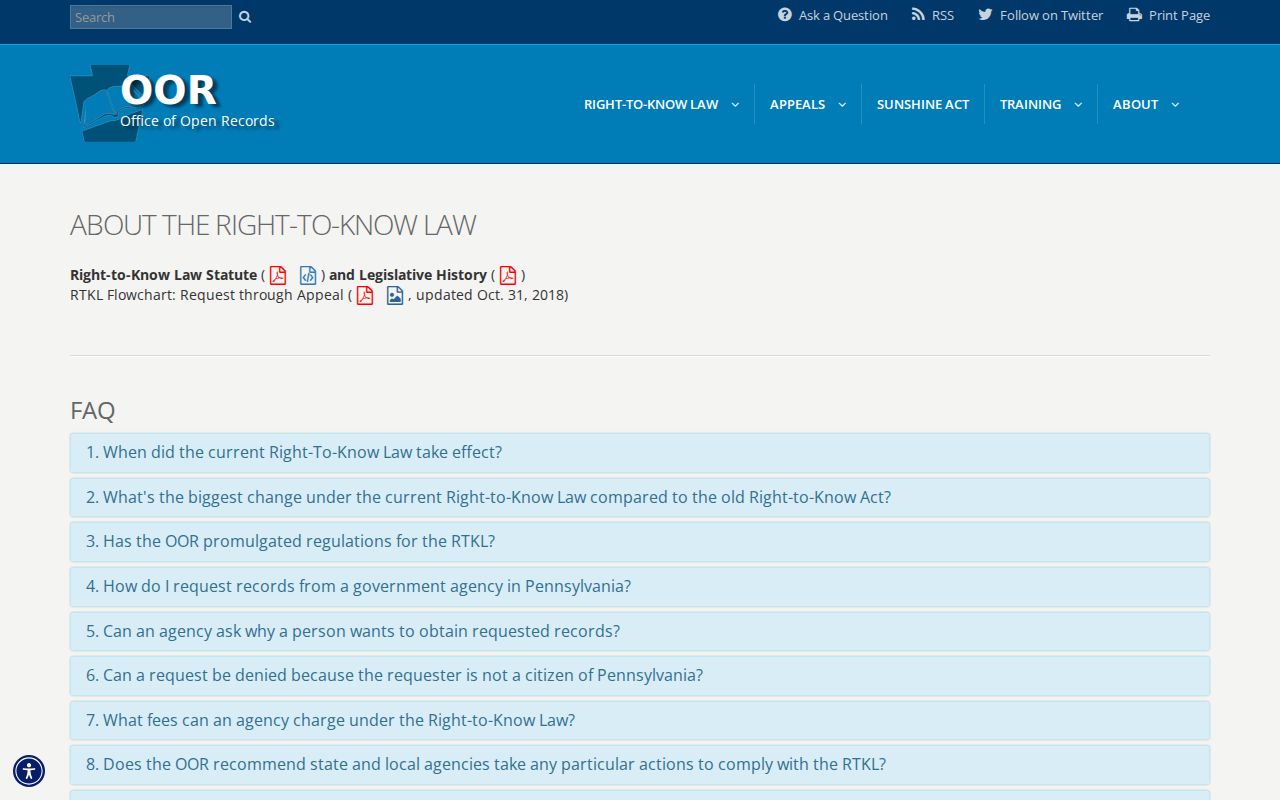
The statute presumes access subject to exemptions, other laws, privileges, and court orders.
Allentown Records Across Time
Allentown’s record trail is layered, not a single database. Lehigh County land records date to 1812; the Recorder reports book retention through April 19, 2002 and computer imaging beginning April 22, 2002, with security microfilm and image preservation described as 1812-present. In 2008, the Clerk of Judicial Records combined functions previously associated with the Clerk of Courts, Recorder of Deeds, and Register of Wills. Older documents may use those historic office titles, while the current division provides the access route.
That history matters when a resident lookup reaches an older deed, estate, or directory entry. The online result may stop, but the next source can be a Recorder book reference, a County ORA account, an Allentown Public Library microfilm reel, or a Historical Society collection. Keep each source’s date and spelling intact.
Note: A public docket removed under a court retention schedule is an access limit, not a finding that no historical record existed.
Allentown Resident Lookup Limits
Records can be delayed, corrected, sealed, redacted, or limited by the type of record. Pennsylvania’s Address Confidentiality Program gives qualifying participants a substitute mailing address in specified government records. Voter records exclude signatures and SURE numbers from public lists. Motor-vehicle data is not a fallback source, and a property owner or tax-mailing address is not proof of every person connected with a parcel. When the official trail stops, use the custodian, library, archives, or an appropriate statutory program instead of guessing.
Lawful use. Use an Allentown resident lookup for personal, lawful research. Pennsylvania’s harassment and stalking laws apply to conduct that threatens, follows, repeatedly contacts, or causes distress; never use record information to stalk, harass, intimidate, or harm anyone.